


MV Fuse-Link Automation: Where Expertise Meets Technology
The production of medium-voltage (MV) fuse-links requires precision, reliability and flexibility. At ETI, we have taken an important step towards more efficient and advanced manufacturing by developing new automated equipment, integrating robotics and connecting production processes.
From Manual Operations to Advanced Automation
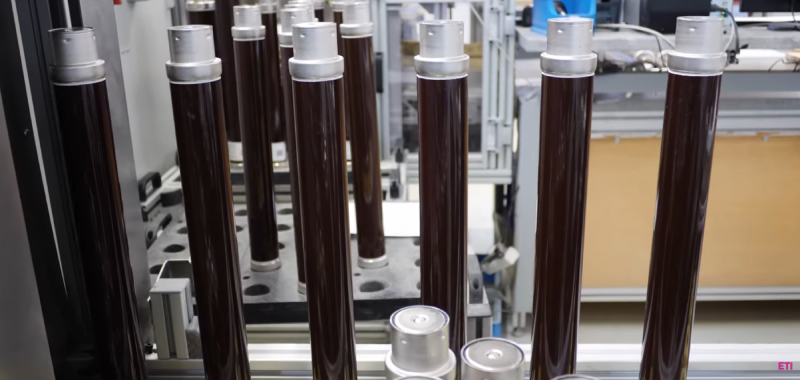
Manufacturing MV fuse-links is a technologically demanding process due to their dimensions, ceramic components and varying technical requirements. Although certain production operations were already automated, considerable manual intervention was still required between them.
To address these challenges, we focused on modernising key stages of production. Our goal was to reduce manual handling, increase efficiency and ensure greater process repeatability.
Rather than simply upgrading existing equipment, we developed new solutions that enable the automated production of different fuse-link types and greater manufacturing flexibility.
Precise Winding and Welding of Fuse Elements
One of the first steps in the automation process involves preparing the fuse elements, which are essential components of every fuse-link.
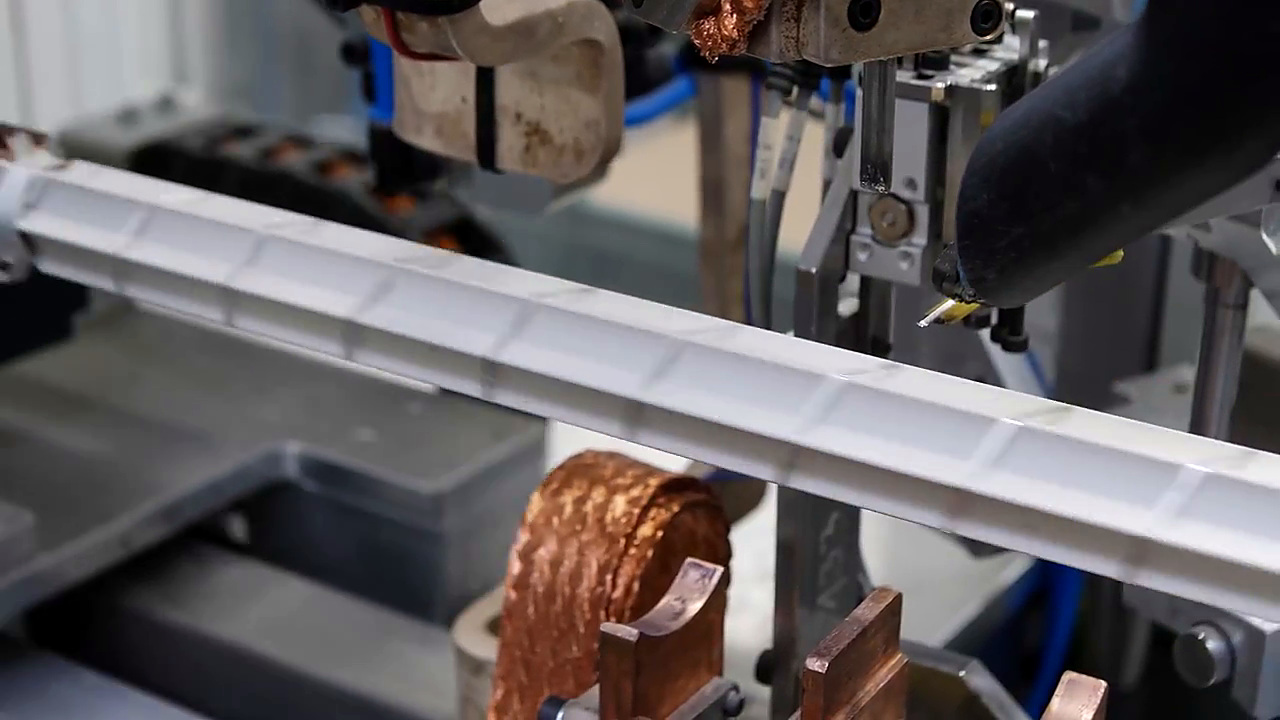
For this purpose, we developed a machine for automatically winding and welding fuse elements onto ceramic supports. Equipped with six servo axes, the machine ensures synchronised operation and allows programmable adjustments for different product types.
Following initial manual preparation, the machine automatically performs the winding, welding and cutting of fuse elements. A specially developed welding system, using a single welder and electrode, ensures process repeatability on both sides of the support.
This solution reduces the need for manual work while enabling a more precise and controlled manufacturing process.
Automated Assembly and Simultaneous Crimping of End Caps
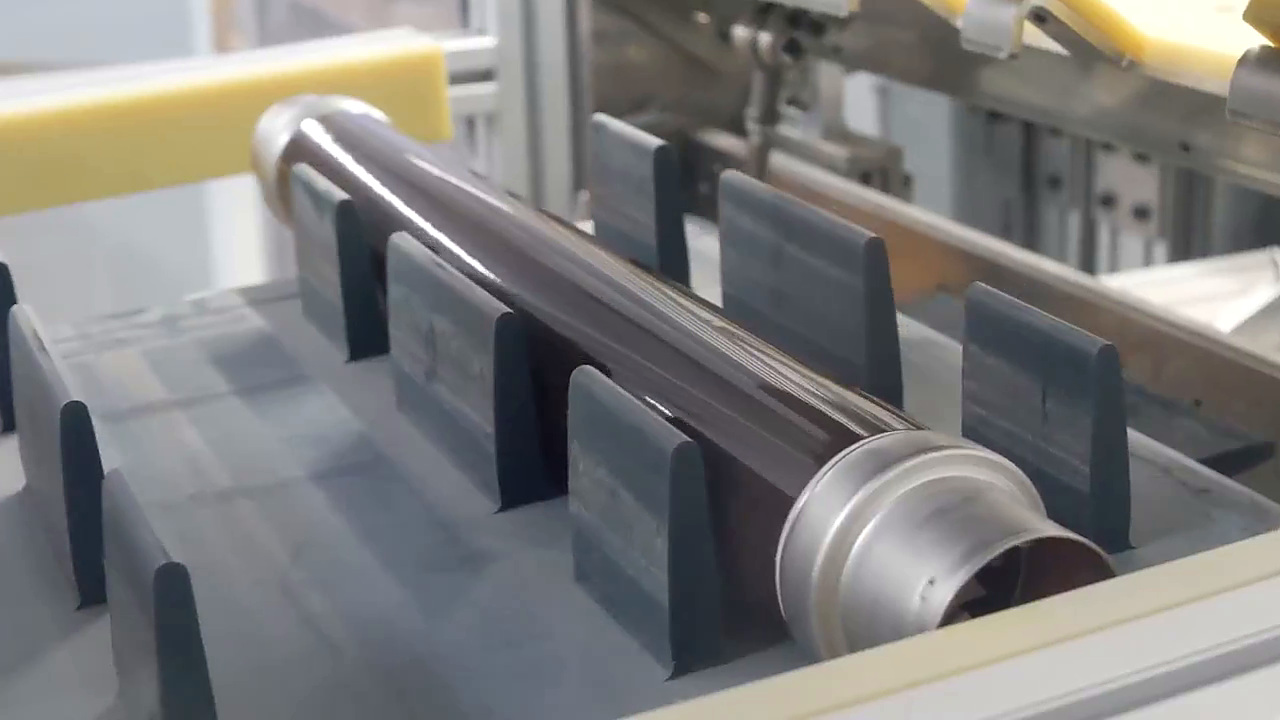
Another significant improvement in production is a new machine designed to crimp both fuse-link end caps simultaneously.
Once the ceramic tube has been prepared with the inserted support and the end caps have been fitted, the machine automatically takes over the partially assembled fuse-link, clamps it in place and crimps both end caps at the same time.
A key feature of the system is its ability to automatically adjust to different fuse-link dimensions, enabling more efficient production without complex manual adjustments.
The machine also includes a labelling unit that applies a 2D code to each product. The information stored in this code is used in subsequent production stages, allowing the relevant technological parameters to be adjusted accordingly.
Robotics in the Sand-Filling Process
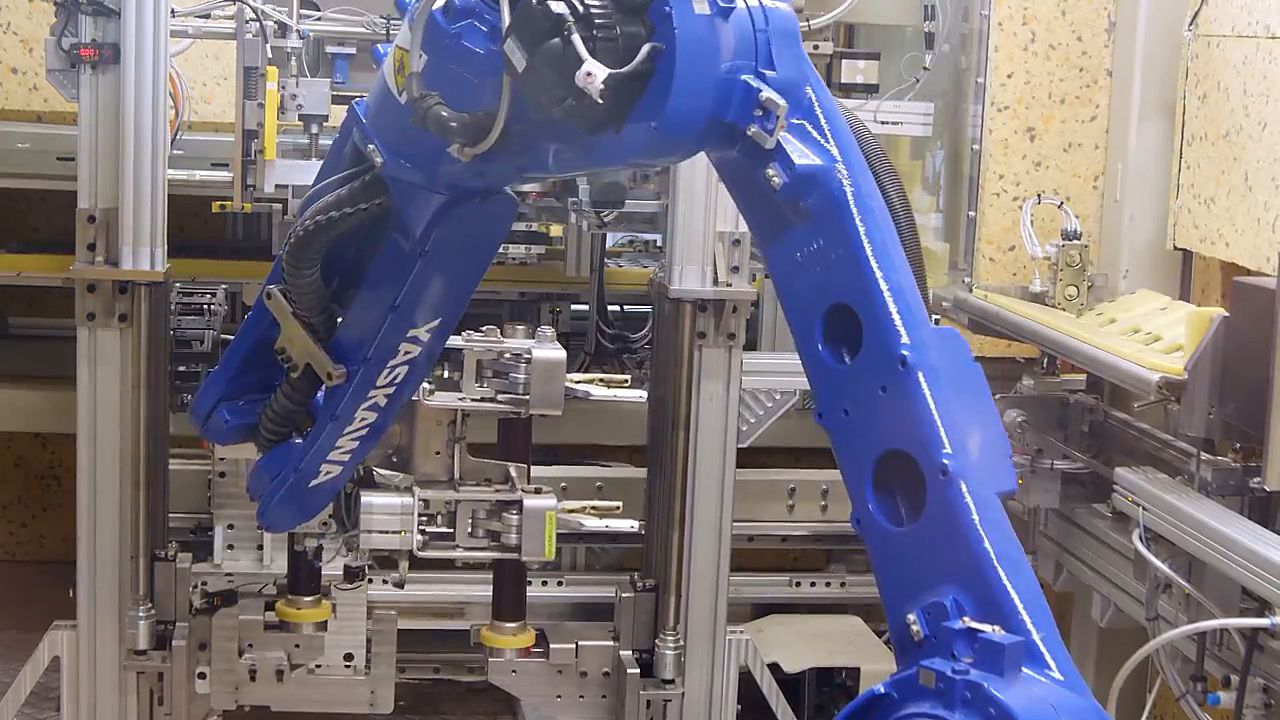
One of the most extensive parts of the project involved developing an automated sand-filling machine, which performs an important stage in MV fuse-link production.
Partially assembled fuse-links are transported into the machine via a chain conveyor, where the system reads their identification codes and automatically sets the required technological parameters.
After the upper end cap has been crimped, a six-axis robot picks up the fuse-link and transfers it to one of three sand-filling units.
As different fuse-link types vary in length and diameter, we developed a specialised robotic gripper and clamping system. These allow products of different dimensions to be processed without manual mechanical adjustments.
This has increased manufacturing flexibility, reduced the need for manual intervention and improved the efficiency of the overall process.
Smart Manufacturing and Data Connectivity
Modern automation involves more than just advanced machinery and robotics. Connecting equipment and enabling data exchange are equally important.
The automated machines are equipped with local control systems that allow each machine to operate independently. An industrial computer enables data exchange between the machines and the wider information system.
We also use the MQTT communication protocol for data transmission, enabling structured information exchange between different systems.
This approach follows Industry 4.0 principles, providing better visibility into production processes, supporting data analysis and creating opportunities for further manufacturing optimisation.
Driving Manufacturing Efficiency Through In-House Expertise
The automation of MV fuse-link production is more than just an equipment upgrade. It is the result of the technical expertise, experience and collaboration of our specialists.
By developing new technological solutions, we have improved process repeatability, reduced manual work and increased equipment flexibility across different product types.
These improvements are an important part of our ongoing development. By combining automation, robotics and digital technologies, we are creating the conditions for more efficient manufacturing while maintaining the high quality standards of our products.